|
|
|
Concrete Printer Friendly Version | |||||||||
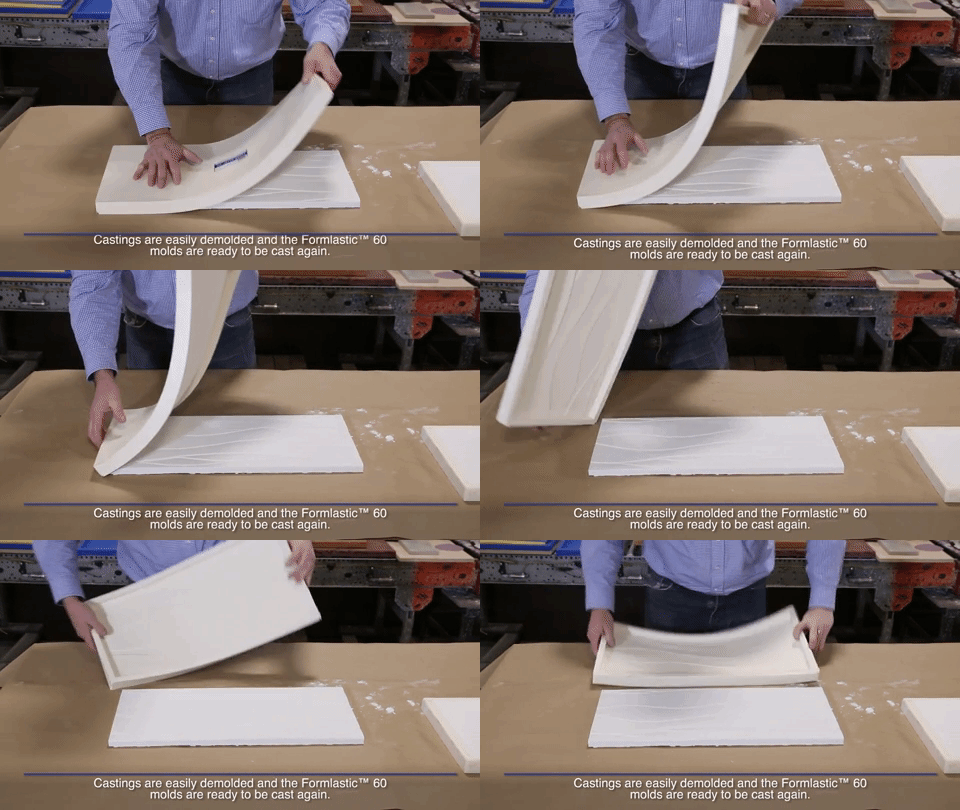
Using urethane
rubber to make molds for casting concrete has many advantages:
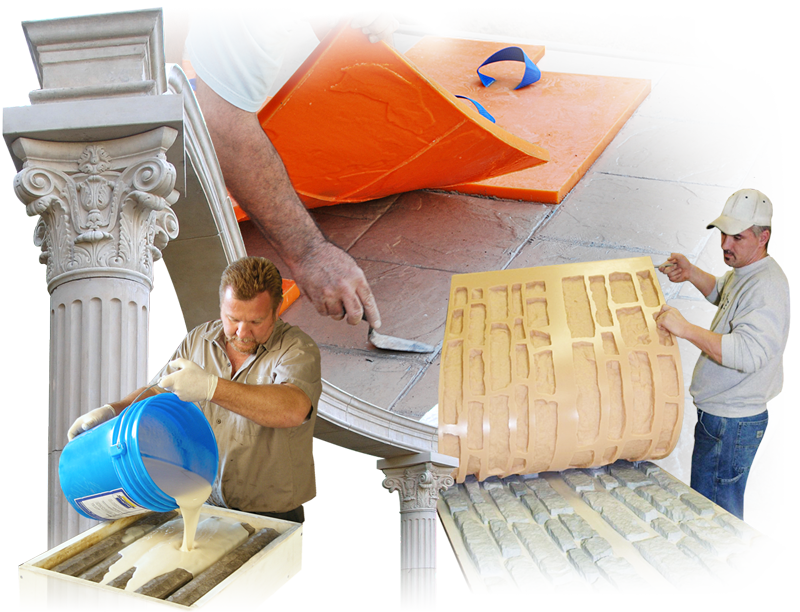
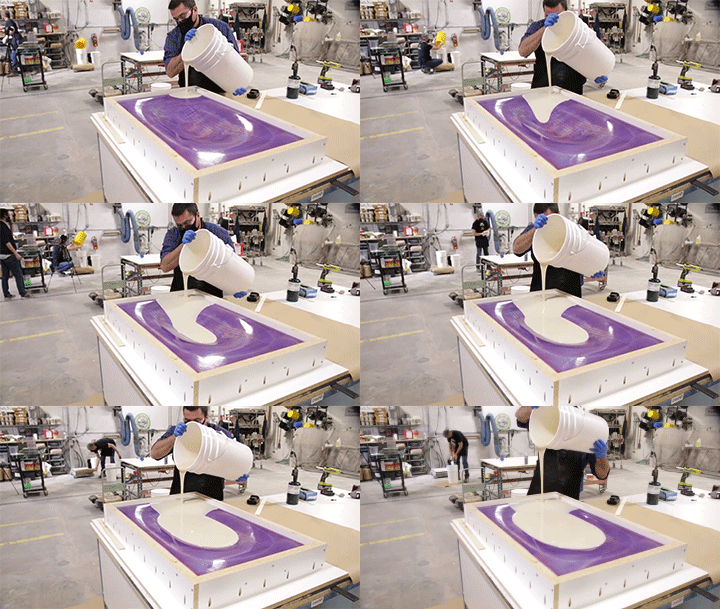
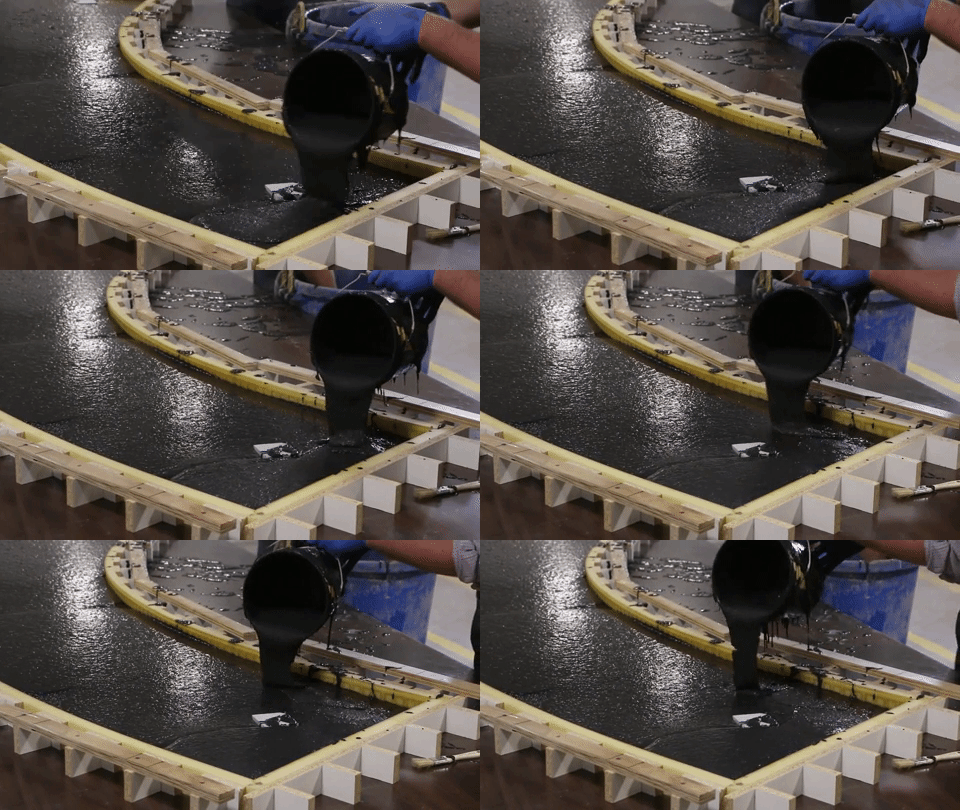
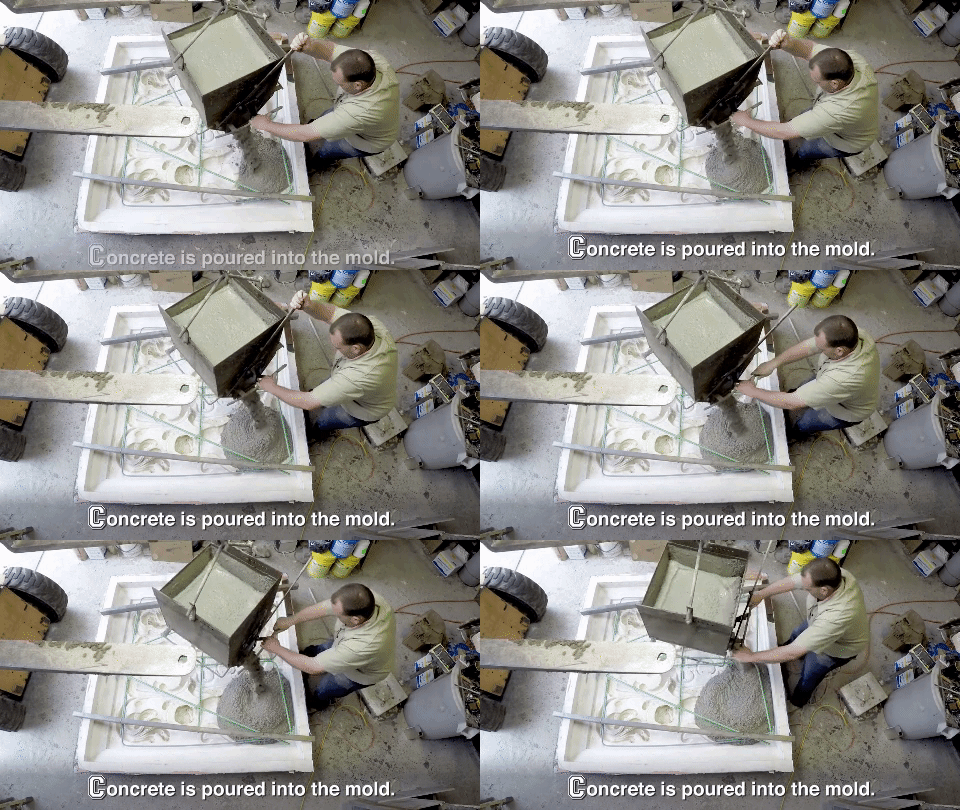
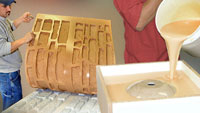
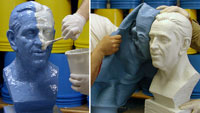
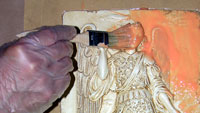
General Overview: To be successful in making a urethane rubber mold suitable for making one or more concrete castings, you need to first prepare your model to release the mold rubber (apply a sealer and release agent). Next, mix and apply mold rubber if brushing or spraying rubber onto mold, applying a support shell will be necessary once the rubber is cured. After rubber is cured, remove from model. Before casting into mold, apply a release agent to facilitate demolding of cast piece. Mix and cast concrete or other material into mold. Allow concrete to dry and demold. If you have done everything correctly, you will have an exact copy of your original and can making many castings with your rubber mold. For details on making molds,
refer to Smooth-Ons technical bulletin on making molds
available from Smooth-On or a Smooth-On distributor.
A. Select Mold Rubber Decide
if you will be applying rubber by pouring, brushing or spraying Mold Rubber Pourable:
Mold Rubber Brushable
Mold Rubber Sprayable
B. Sealing Agent (SuperSeal) D. In & Out Water Based Concrete Release Agent to release casting. E. Concrete How To Proceed Step 1.
Seal Your Model Using Smooth-On SUPERSEAL. Step 2.
Apply A Release Agent Smooth-On Universal Mold Release. Step 3.
Apply Mold Rubber. Step 4.
Demold. Step 5.
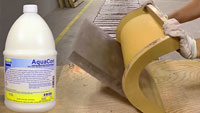
Before Casting, Apply A Release Agent In & Out Concrete
Release. Step 6.
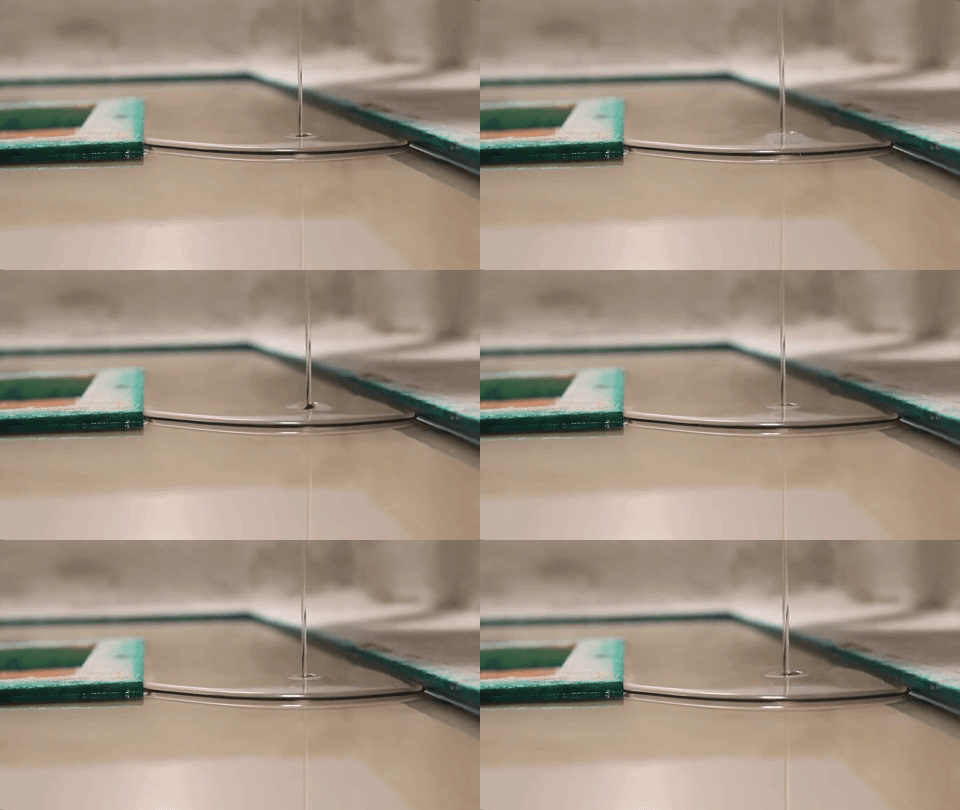
Cast Concrete. Step 7. Remove Casting From Rubber.
Eliminating Surface Voids in Concrete Printer Friendly Version Introduction The following information has
been compiled through our experience with professionals who cast
concrete for a living. Some of the tricks found here are results
of many years of research and development. Although one may Question: What are
surface voids? Question: How are
surface voids caused? Answer: Release agents act as a "lubricant" between the mold and the concrete itself. The proper application of a release agent will yield castings without surface voids. However, when a release agent is over applied, it may "pool" or "puddle" on the lower extremeties of the mold. As the concrete is poured into the mold these pools prevent the concrete from filling in all the detail. When the casting is removed from the mold voids will be apparent in the areas where pooling occurred. Vibration magnifies this problem by forcing additional release agent into the lower extremities of the mold. Voids caused by too much release agent are recognizable as small spherical voids on the surface of the finished casting. These voids usually measure about 1/8" (.31 cm). Question: How does water cause surface voids? Answer: Similar to release agents, water is also trapped against the molds working surface resulting in voids. As the concrete cures and the residual water evaporates, a cavity is left behind on the surface of the casting. Vibration also tends to force water from the cementious material, however most voids caused by water are a result of a high water to cement ratio. Similar to release agents, water is also trapped against the molds working surface resulting in voids. As the concrete cures and the residual water evaporates, a cavity is left behind on the surface of the casting. Vibration also tends to force water from the cementious material, however most voids caused by water are a result of a high water to cement ratio. Question: How does air cause surface voids on my finished concrete casting? Answer: In most circumstances, air voids have an irregular shape and tend to be much larger (1/2" or 1.27 cm.) than those caused by water or release agents. The air voids are caused by air trapped between the mold surface and the concrete. They generally appear in low slump concrete and can be found underneath irregular (non-spherical) shaped pieces of crushed aggregate. This is a result of having too little mortar to fill the spaces around the aggregate. Voids caused by air may also be found in castings that have severe undercuts. How To Eliminate Voids In A Concrete Casting: While many variables must be considered in the elimination of surface voids or bug holes in concrete castings, there are a number of precautions that can remedy this unsightly problem. Careful preparation and methodical practices can eliminate even the worst of surface voids. The following section describes procedures and materials that will produce finished castings that even the most discerning eye will accept. Question: Will adding more
mortar to the concrete assist in reducing surface voids? Answer: Using a larger aggregate may cause more surface voids because air is entrapped under the irregular shapes of this material. There is also a larger volume of voids between larger aggregate pieces than smaller pieces. It is therefore recommended that a smaller aggregate be used or that a smaller aggregate be mixed with the larger particles. The smaller aggregate will act as a "roller system" to assist in turning the larger pieces of aggregate during vibration. It is recommended to use aggregate that passes through a number 50, 100 or 200 sieve. Question: Does the type of cement I use in my mixture make a difference? Answer: Cement acts as a lubricant during vibration and allows larger pieces of aggregate to move around freely. Therefore it is recommended that a very fine cement be used to achieve a more fluid consistency. Fly ash, which is finer than cement particles, will increase the lubricity of the cement even further. Question: What precautions should I take if my concrete has a low water-cement ratio? Answer: If the concrete you are casting has a low water-cement ratio, more mixing time will ensure that water and air bubbles are forced away from the aggregate and thereby eliminate the voids on the casting surface. Low water-cement ratio concrete also requires an increased vibration period. Question: Ive heard that adding plasticizers to my concrete mixture will help eliminate surface voids. Is this true? Answer: Yes. The addition of plasticizers are used effectively in creating large slump increases. The benefit of using a plasticizer is that these large increases can be attained without effecting the water-cement ratio. The result of increasing the slump will assist air, water and aggregate to move more freely throughout the mixture. Although platicizers will permit a large increase in slump, the concrete will begin to set much quicker. This means that there is a much smaller time period for the concrete to be vibrated. In order to eliminate surface voids from appearing we recommend using a release agent in tandem with plasticizers. The release agent will allow the concrete to move freely and force voids away from the surface of the casting. Answer: Question: What type of mold or form material should I use? Answer: Form or mold surfaces be as smooth as possible to decrease the surface tension between the concrete and the mold. Rubber molds are being used more and more for just this reason. The proper release used on a rubber mold will give the best possible surface. Question: Im vibrating the concrete, but still have bug holes in the casting? Answer: This occurs because air and water bubbles are the lightest elements of the concrete and will naturally flow to the most fluid portion of the mix. It just happens that this area is next to vibrator. So if you are using an external vibrator, the form or mold should be hammered. Hammering allows the mortar to flow toward the area being hit, consequently pushing air and water bubbles to the opening of your mold. This technique is recommended for molds with deep undercuts, where air and water bubbles tend to be predominate. Question: How beneficial are release agents? Answer: Not only do release agents assist in eliminating surface voids, they also prolong the life of your mold. However, choosing the correct release agent and proper application are extremely critical. Various release agents will provide different surface finishes of your concrete casting. We recommend a chemically active release agent. The amount of release that is
applied to the mold or form will greatly effect the surface of
your casting. Excess release agent tends to consolidate into
spheres that cause bug holes. Too much release agent can be
evidenced by voids on the lower portions of your casting. Applying
release agent in a thin coat will eliminate these voids. Helpful Hints To Void Free Casting: As any professional caster will tell you casting concrete is not an exact science. There are many variables and therefore no way to ensure void free castings. Voids can be minimized, however, and the following hints are offered to improve your chances for success. Hint # 1 Hint # 2 Hint # 3 Hint # 4 Hint # 5
|
||||||||||
|
Home |
Site Index | Search | Contact |
About | Feedback | History |
Applications | Mold Makers |
|||
|
|
Email Us Order Desk (800) 762-0744 Fax (610) 252-6200 Technical Help Line (610) 252-5800 |
||