Preservation-quality mold-making and casting for statuary, architectural, garden and fine art elements. Specialty creation and casting of ornamental designs in polymer modified cements and resins. Cast-stone replicas made of figurative sculpture. Mold-making for resin and concrete production casting. Over 25 years’ experience in ornamental fabrication and restoration. Conservation of fine art sculpture. Consulting, assessments and treatment planning for monuments and decorative restoration.
Specialties
- Statuary restoration
- Sculpture and moldmaking of architectural elements
- Fiberglass reinforced casting for gypsum and polymer cement
Showcase Gallery
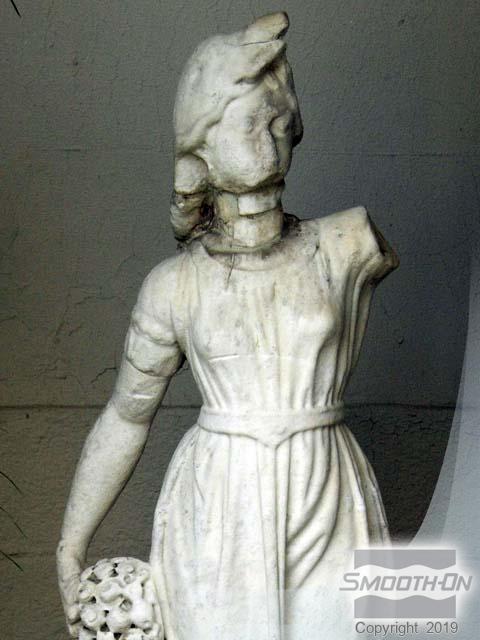 The original marble statue, in dire need of restoration.
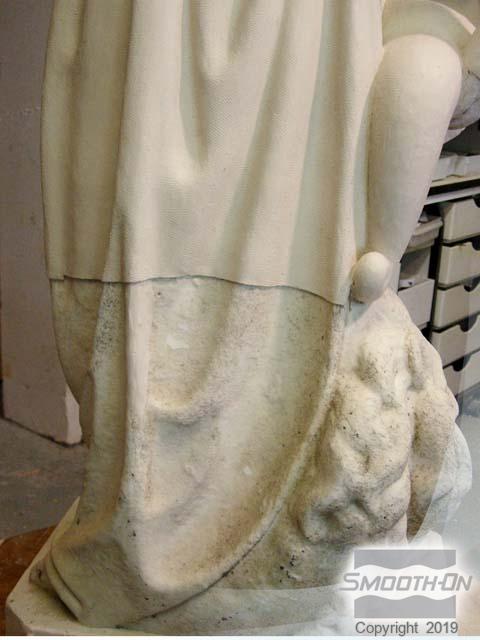 Restoring the original. Using SuperSeal™ to temporarily seal the statue, clay is layered over the surface. Here, you can see the line between the old and the new.
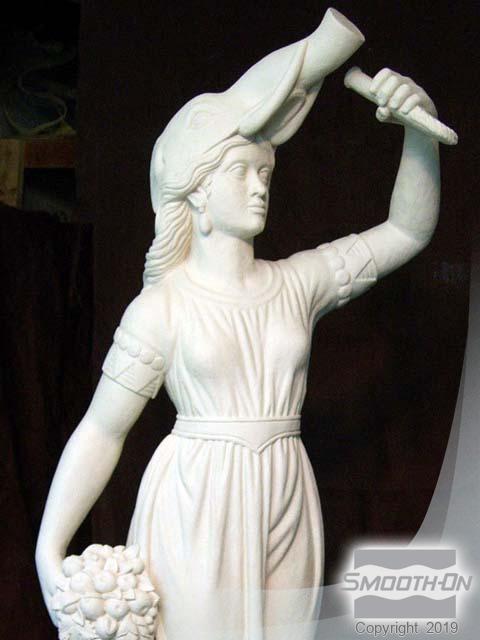 With the clay restoration complete, the clay will be removed after the mold is made and the SuperSeal™ will be washed off, leaving the statue clean.
 With the clay restoration complete, the clay will be removed after the mold is made and the SuperSeal® will be washed off, leaving the statue clean.
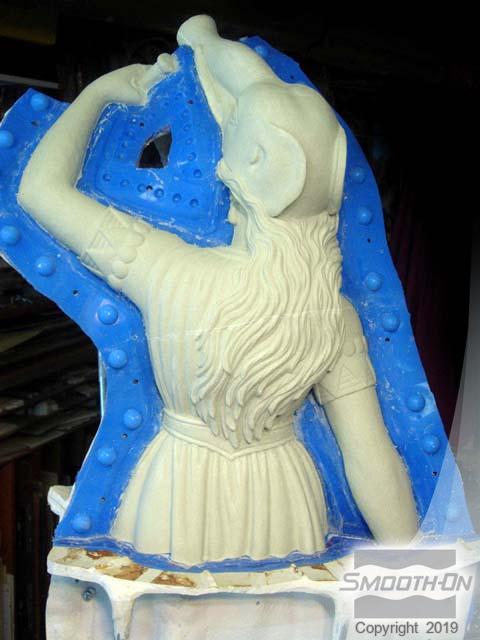
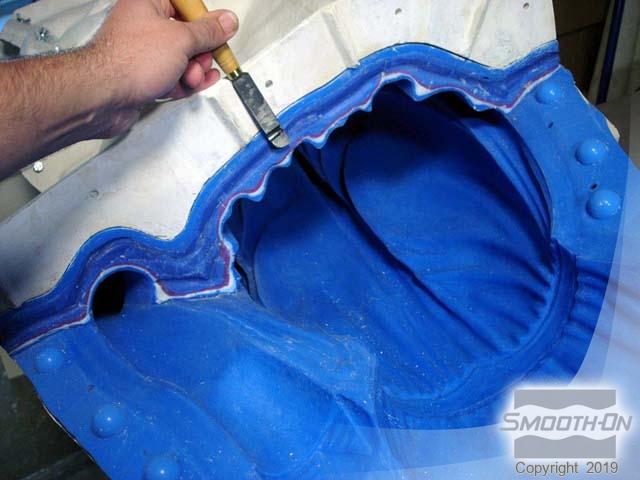 The back of this figure is molded with keys and parting seams. Smooth-Sil™ 920 allows the building of these ''tooling features'' with minimal trouble.
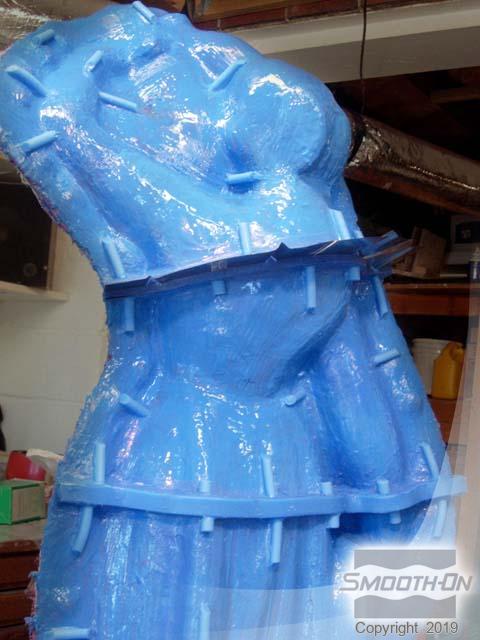 A mold knife is used to clean and sharpen seams along the back sections.
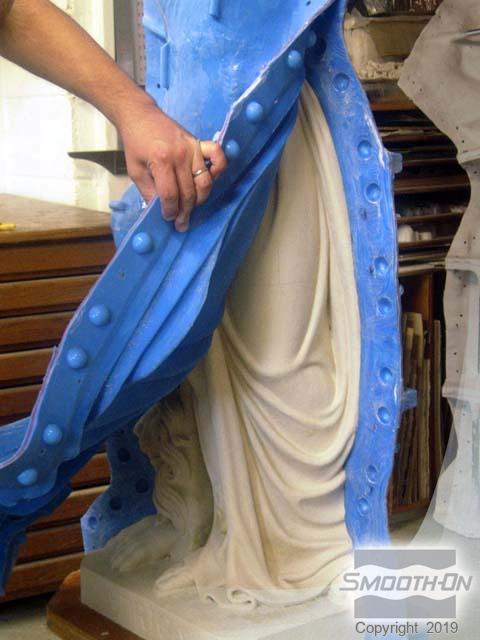 A replica is made using a hand layup method to capture detail accurately. Since the statues are cast holllow, the artist needs to be able to reach inside the molds as he is working.
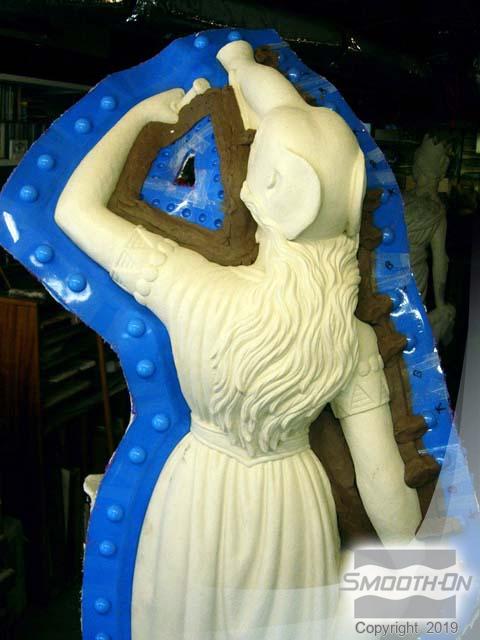 With the clay restoration complete, the clay will be removed after the mold is made and the SuperSeal™ will be washed off, leaving the statue clean.
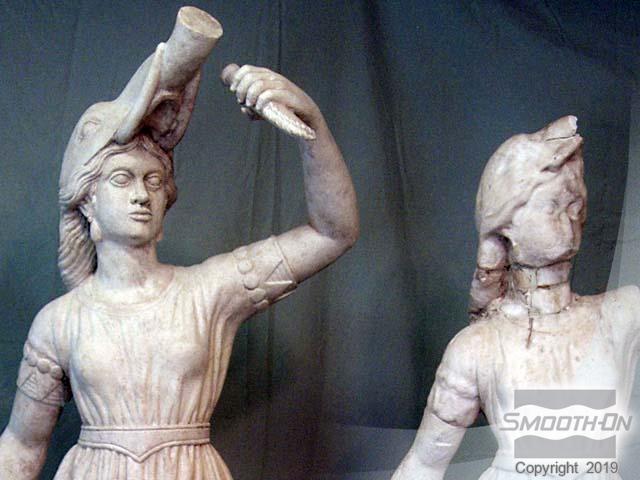 The replica is patinaed. Here is the replica next to the original. Now the artist uses the new mold to cast weathered replacement parts for the original statue.
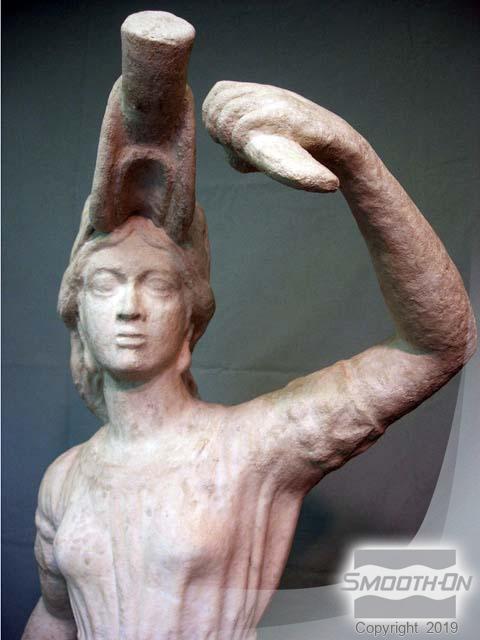 Using a special techique of layering the mold with wax, the artist simulates surface wear. A head and arm are cast in polymer cement that has less detail, matching the original statue.
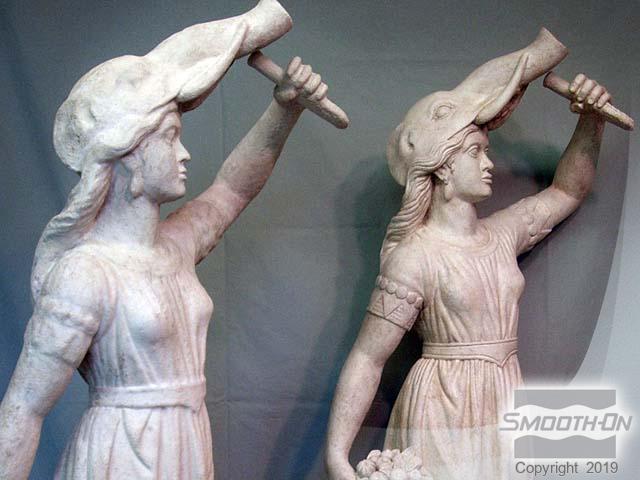 Here is the replica and the restored original.
 The new statue looks great back on the Belmont campus where the original once was.
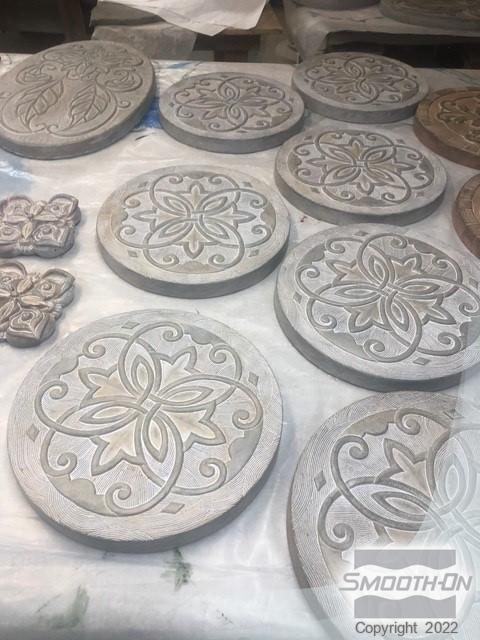 Carved designs were molded with Dragon Skin™ Silicone rubber, and Plasti-Paste™ for the support shells. Casts are made with precision grout & polymer modified cement matrix.
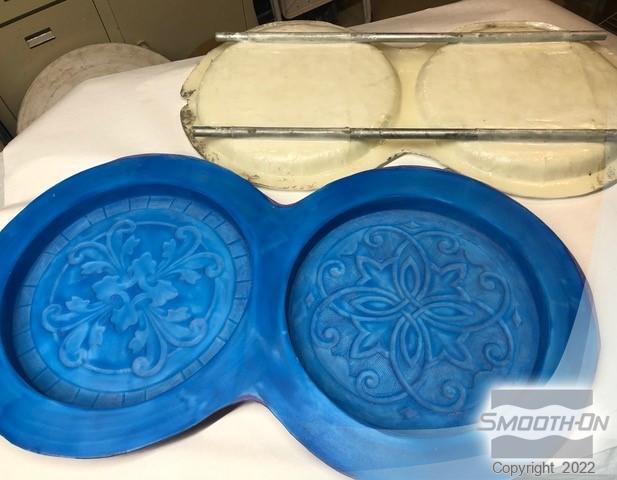 Dragon Skin™ 30 is brushed in layers and Plasti-Paste™ is layered with fiberglass cloth and Smooth-Cast™ 325 resin to create light and sturdy shells.
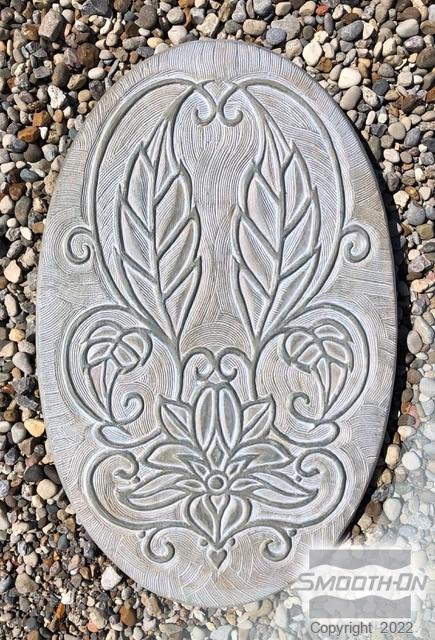 Multiple designs were carved and molded. Casts are finished with a layered patina/sealer.
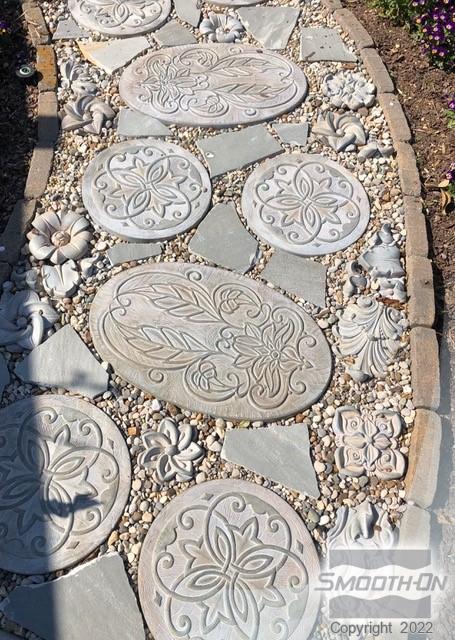 Cast elements are combined with stone and gravel, to create a garden path.
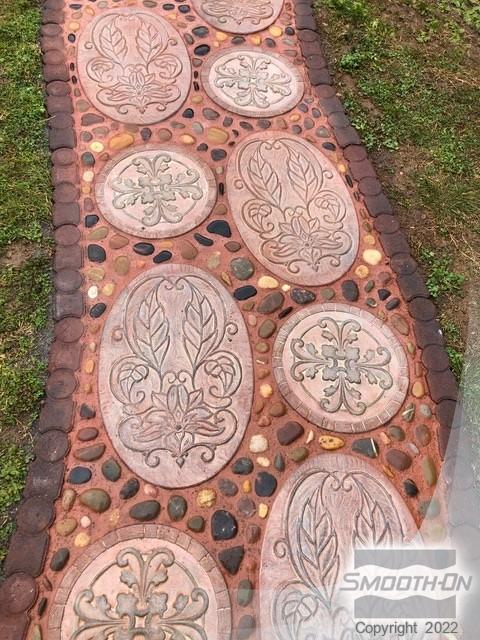 A garden path incorporating cast stepping stones, river stones and tinted mortar.

















Contact Information
http://www.tonynovakstudio.com
641 Gibson Drive
Madison, TN 37115
- Tel: (615) 385-4368
- E-Mail: tonynovakstudio@gmail.com